

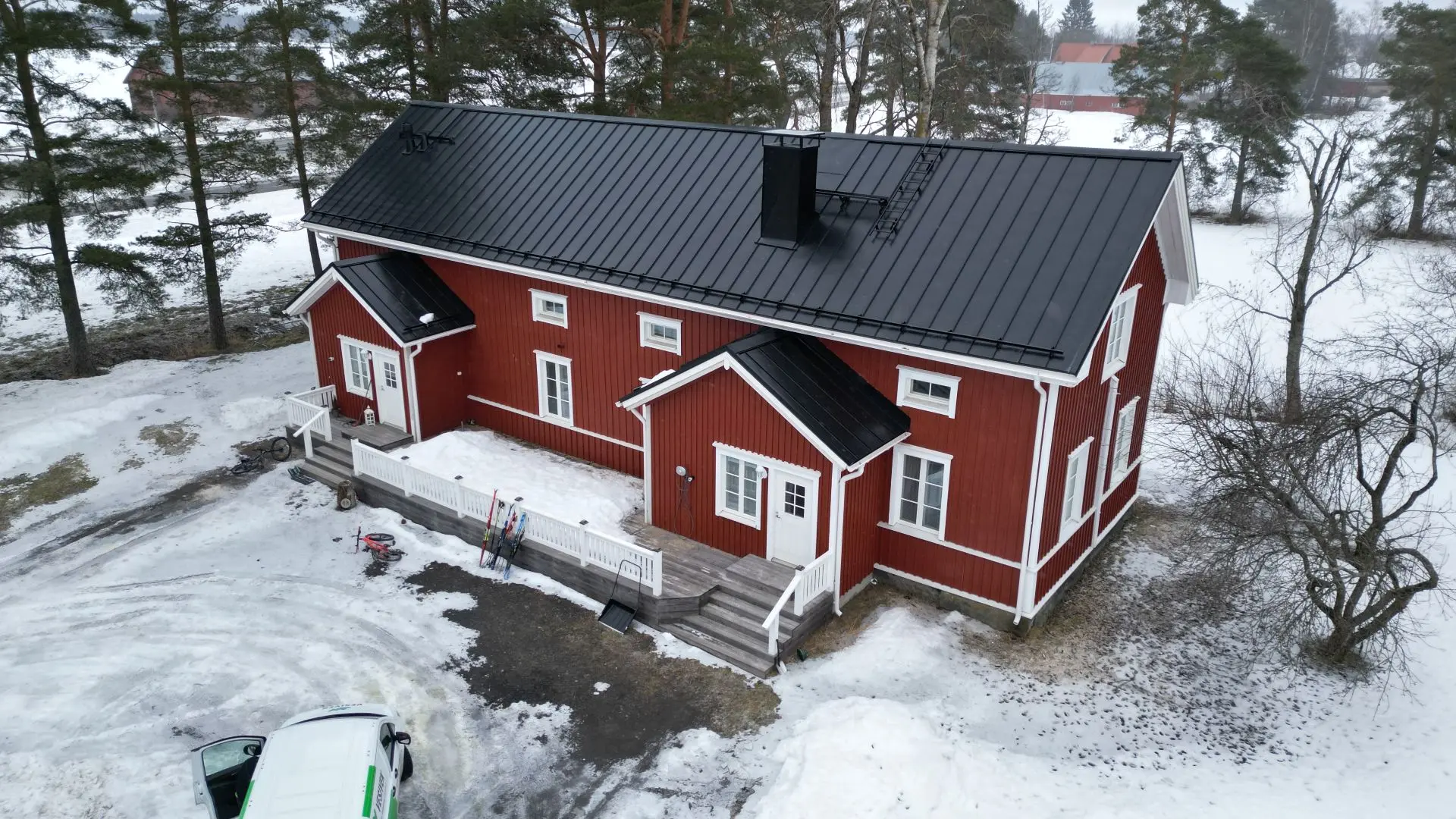
Is your roof leaking, or is water seeping into the basement? Our emergency leak repair service can help
If your roof is leaking, there’s water in the basement, or you suspect moisture is seeping into the building’s structure, don’t wait. Whether it’s a roof leak in a single-family home, a townhouse, a vacation home, or a commercial property, Vesivek’s emergency leak repair service will help you quickly. We have experience with every type of roof and various leak situations throughout Finland. We also provide service when water accumulates in the foundation. An acute drainage problem can manifest, for example, as dampness in the basement.
Feel free to contact us. We’re available 24/7 at 050 572 8789
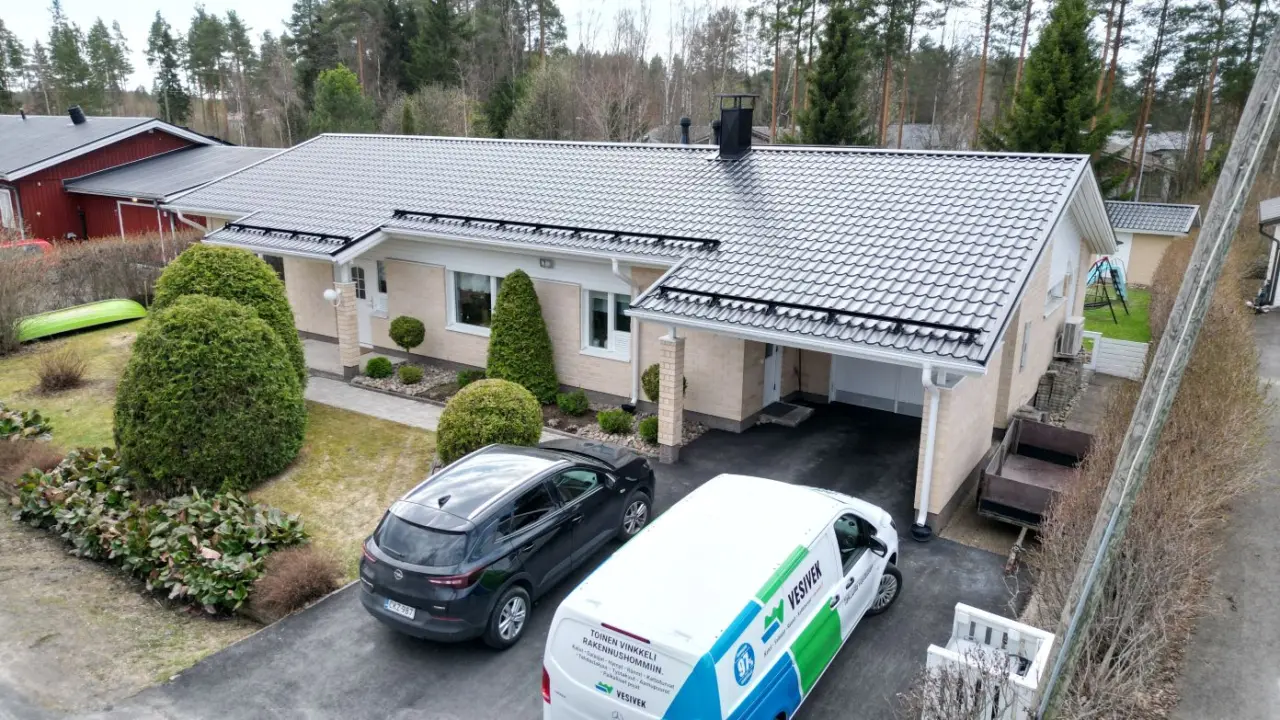
Vesivek’s leak response service is available 24 hours a day, every day of the year
We will arrive on site to assess the situation, take the necessary initial safety measures, and agree on the necessary next steps.
- Call the leak emergency hotline at 050 572 8789
- The on-call service is available 24 hours a day, every day of the year, including weekends and holidays
- We operate locally at 14 locations throughout Finland, within a radius of approximately 100 km from each of our locations
- We can reach the destination quickly within our service area
- Walk-in visits are subject to a fee
Here’s how Vesivek’s emergency leak repair service pricing is calculated
The on-call fee is 150 €. Installation work costs 90 € per hour if repair or protective measures are performed on-site. Billing begins when the technician leaves the office. The mileage charge is €1.90 per kilometer for the round trip from the office to the site. Supplies are billed based on actual usage.
Note: If repairs cannot be performed on-site, only on-call and mileage fees will be charged. For repairs performed during business hours (i.e., outside of on-call hours), only hourly and mileage charges, as well as the cost of supplies, will be billed. Prices include VAT.
Why is the roof leaking?
Roof leaks usually occur in the fall, when rainfall is at its heaviest, or in the spring, when the snow on the roof begins to melt. The most common causes of roof leaks are
- The seals around penetrations are inadequate. If, for example, the penetrations for a chimney, ventilation ducts, an antenna, or a skylight are not properly sealed, water will find its way into the attic during rain or when snow melts.
- The eaves are leaking. Larger amounts of snow and water tend to accumulate, especially at the inner eaves, so even small defects in the roofing can cause a leak.
- The fasteners have failed. The seals on old nails or roofing screws deteriorate over time, and the fasteners may become dislodged from the roofing material as a result of thermal expansion.
- The seams in the roofing are leaking. Over the years, thermal expansion can cause the seams—especially those in interlocking roofing—to come loose.
When the roof of a single-family home leaks, does insurance cover the roof leak? This question often comes to mind when roof damage occurs. Insurance does not automatically cover a leaky roof, as factors such as potential construction or maintenance defects can affect the matter. It’s always best to contact your insurance company directly regarding these issues.
Why is there moisture in the basement?
The cause of moisture in the basement could be, for example, a broken pump or clogged drainage pipes. In any case, you should contact emergency services immediately: the longer the leak continues, the more damage the moisture will cause.
Moisture or puddles on the basement floor are usually a problem during the fall rains and spring thaw. Especially if the subfloor structures get wet repeatedly, this will inevitably lead to rot and mold damage at some point—and, in the worst case, indoor air quality problems. That’s why it’s important to identify the cause of the leak early on. Vesivek’s experts also perform condition inspections of drainage systems.
- In properties with basements, moisture insulation of the foundation is particularly important. Especially in older buildings, the insulation is often inadequate or has deteriorated over time.
- If the drainage system includes a pump station, the pump may have broken down. The pump should always be equipped with an alarm system that warns of a rising water level.
- Clogged drainage pipes or a drainage system that is otherwise not functioning properly can cause water to back up into the basement.